About
The Digitalk eSummit event format is a unique fusion of an annual conference and an online expert community, where you can consume presentation videos at your own pace and connect with other professionals.
Event STAGES
We’ve grouped the webinars into Stages based on their themes to help you easily find the topics that interest you most. Choose the Stage that catches your attention and explore the exciting sessions and content waiting for you there!
Be part of the Digitalk eSummit community and dive into webinars covering the hottest trends in your field!

Cyber Security Stage
The Digitalk Cyber Sec eSummit 2025 is a virtual event series showcasing the latest trends, technologies, and experts in cybersecurity. It connects professionals worldwide to share insights, discuss emerging threats, and explore innovative solutions, offering valuable content and networking opportunities for all experience levels.
Sponsors:
Featured interviews:
Tech talk:
NIS2 Readiness and Audit Support
Presenter:
Dr. Dániel Váczi
CEO, Co-founder of Brind
Status:
On Air
Coming soon
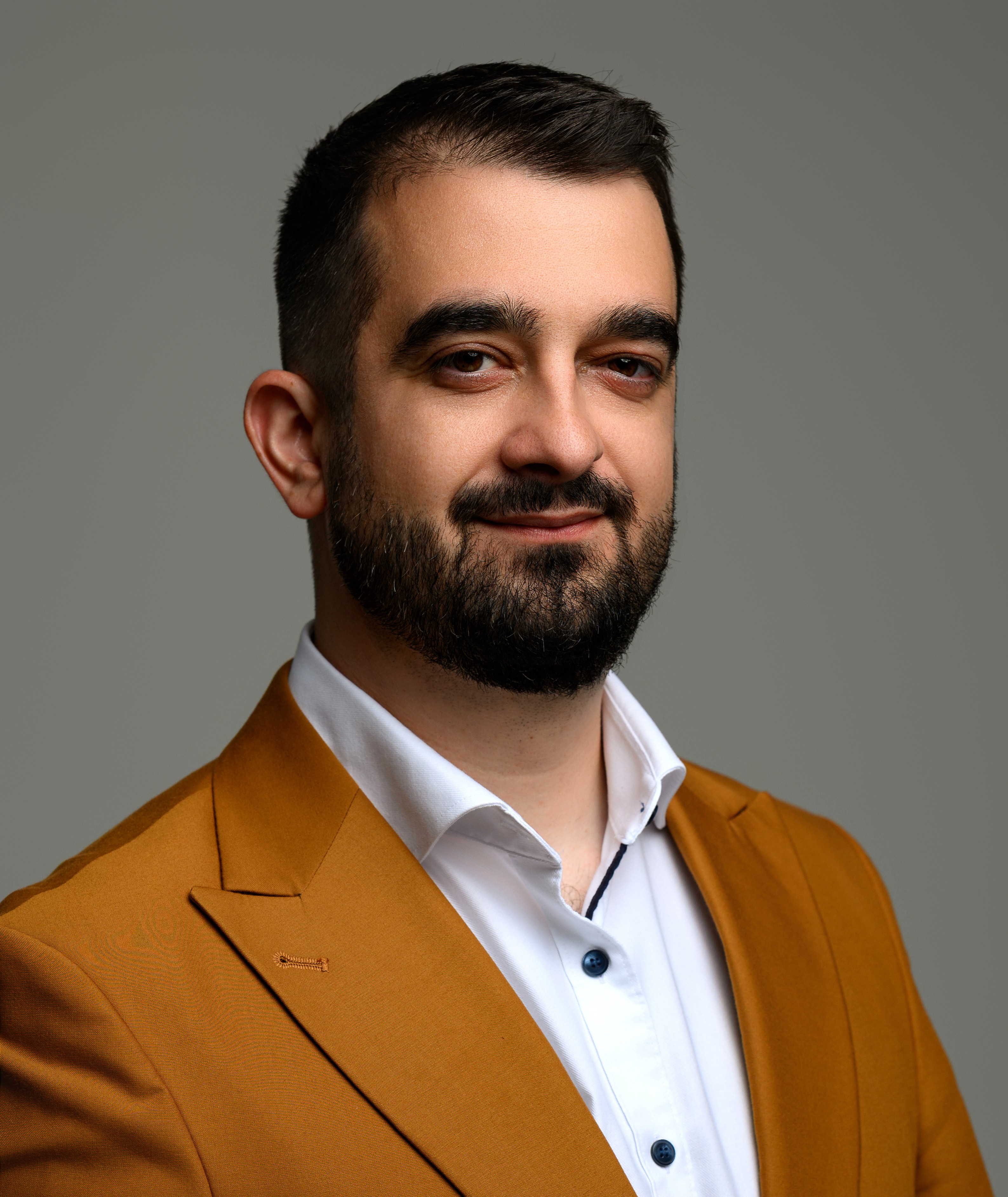
Dr. Dániel Váczi
CEO, Co-founder of Brind
Over the past 10+ years, Dr. Dániel Váczi has worked with numerous international and domestic market players, as well as organizations operating in the public and defense sectors, as a consultant, entrepreneur, and researcher. When founding Brind, his primary goal was to create a platform that addresses real, existing challenges within the ecosystem: supporting IBFs/CISOs, facilitating NIS2 compliance and audits, connecting stakeholders, enabling information sharing, and reducing resource shortages across the EU, including Hungary.
NIS2 Readiness and Audit Support
The presentation explores how Brind’s innovative platform accelerates preparation for NIS2 and makes compliance and audit processes more transparent. We will demonstrate how the platform supports various ecosystem stakeholders through a unified and efficient solution. The short introduction will be followed by a live demo, offering a hands-on view of how compliance can become simpler and more business-driven.
This presentation will address the following questions:
- How can NIS2 compliance be viewed not as a burden, but as a business advantage?
- How does Brind support organizations and consultants in digitizing preparation and audit processes?
- How can the management of risks, controls, and documentation become more transparent and faster on a shared platform?
The presentation is for you, if:
- You are a domestic independent company looking for an efficient, cost-effective solution to support NIS2 preparation and audits.
- You are a domestic corporate group that needs to manage compliance across multiple subsidiaries in a unified way.
- You are part of an international corporate group and want to manage Hungarian NIS2 obligations alongside compliance requirements in other countries on a modern digital platform.
TOTP is not a silver bullet
Presenter:
Szilárd Pfeiffer
Status:
On Air
Coming soon

Szilárd Pfeiffer
A free software fanatic developer, a security committed engineer, a free-culture enthusiastic journalist, an agile believer manager.
TOTP is not a silver bullet
The presentation about how such a simple security solution like TOTP can be incompletely implemented, configured and how it may create the false sense of security.
The presentation will answer the following questions:
- How TOTP works?
- What security issues may arise with TOTP?
- What are the compliance requiremnt against a TOTP solution?
- How secure are the most popular services in the point of veiw of TOTP?
- What are the security/usablity problems of the most popular TOTP applications?
Spreading IT systems - The next breach can be your car
Presenter:
Liran Zwickel
VP of Cyber at Enigmatos
Status:
On Air
Coming soon
.png)
Liran Zwickel
VP of Cyber at Enigmatos
Liran Zwichel is the VP Cyber at Enigmatos, where he leads the company’s cyber research and development efforts. A recognized expert in automotive cybersecurity, Liran brings extensive experience in securing connected and software-defined vehicles. He is a seasoned security researcher with deep knowledge of embedded systems, Linux internals, and kernel-level development. Before joining Enigmatos, Liran served as a Captain in an elite offensive cyber unit of the Israel Defense Forces (IDF), contributing to a wide array of advanced cyber operations. He holds a B.Sc. in Computer Science and plays a key role in shaping Enigmatos’ cutting-edge fleet protection technologies.
Spreading IT systems - The next breach can be your car
This presentation explores the growing cybersecurity risks in modern vehicles, where internal networks like the CAN bus have become critical targets for hackers. It highlights how attacks on diagnostic devices, telematics units, and sensors such as TPMS can compromise vehicle safety and data integrity. The session aims to raise awareness about automotive cyber vulnerabilities and how to mitigate them.
The presentation will answer the following questions:
- How has the car evolved into a connected IT system vulnerable to cyberattacks?
- What are the main entry points for attackers in modern vehicles?
- How can malicious access to the CAN bus lead to manipulation of vehicle behavior and safety systems?
- What can manufacturers and fleet operators do to detect and prevent such attacks?
The presentation is for you, if:
- You work in automotive manufacturing, telematics, or fleet management
- You are responsible for vehicle cybersecurity, IT security, or risk management
- You are an R&D or product leader developing connected vehicle solutions
- You are interested in understanding how cyber threats affect road safety and mobility systems
Evolution of Continuous Security Validation with AI
Presenter:
Hom Bahmanyar
Global Enablement Officer at Ridge Security Technology
Status:
On Air
Coming soon

Hom Bahmanyar
Global Enablement Officer at Ridge Security Technology
Hom is a well-rounded technology leader with 20+ years of experience working with large enterprise customers as well as global engineering, marketing and sales teams, driving innovative technologies. He’s a cybersecurity veteran with 10+ years at RedSeal, where he drove the integration and modeling of Cloud infrastructure and traditional network devices, and 10+ years at Cisco where he led engineering teams for Cisco Security Manager and IP Solutions Center product lines. As the Engineering VP at RedSeal, he created a strong team culture with focus on execution, innovation, and customer care. He has a passion for strong customer relationship and turning customers into loyal advocates.
Evolution of Continuous Security Validation with AI
As cyber threats grow in scale, sophistication, and automation, traditional security testing and validation methods can no longer keep pace. This presentation explores how AI-driven continuous security validation is reshaping the way organizations identify, prioritize, and remediate vulnerabilities. Attendees will gain insights into the evolving threat landscape, the core challenges faced by modern security teams, and practical strategies for staying resilient against advanced threat actors.
This presentation will address the following questions:
- How has the cybersecurity threat landscape evolved in recent years?
- What are the main challenges currently faced by security teams?
- Why are traditional approaches falling short in addressing today’s security risks?
- What practical steps can organizations take to stay ahead of modern threat actors?
- What defines an ideal AI-powered security validation platform in today’s environment?
From Reactive to Proactive: AI Agents in Identity and Access Management
Presenter:
Justin Woody
Twine - Co-Founder
Status:
On Air
Coming soon

Justin Woody
Twine - Co-Founder
From Reactive to Proactive: AI Agents in Identity and Access Management
IT teams chase orphaned accounts, duplicate identities, and systems that never sync. They fix one problem and three more appear. This is reactive work. It kills productivity and creates risk. AI agents change this. They hunt problems before problems hunt you. They clean data while you sleep. They prevent the fires instead of fighting them. Real deployments show 80% less manual cleanup. Better compliance. Happier users. This presentation shares five practical lessons from real-world deployments of AI Agents for identity data remediation, covering both technical approaches and organizational considerations for gaining stakeholder buy-in. Attendees will learn actionable strategies that align with Gartner's recommendations for modern identity governance.
This presentation will address the following questions:
- How can AI agents proactively identify and remediate identity data issues before they become security risks?
- What are the most common roadblocks to AI adoption in identity governance, and how can you overcome them?
- What results have real-world organizations seen after deploying AI agents for identity cleanup and lifecycle management?
The presentation is for you, if....
- You manage or secure user identities in enterprise IT environments.
- You’re frustrated with manual cleanup of orphaned or misconfigured accounts.
- You’re evaluating or deploying AI in identity governance or IAM workflows.
- You want to improve compliance, reduce risk, and align with modern identity strategies.
Zero Trust and Automated IT Security in Practice – with ManageEngine Solutions
Presenter:
Gergely Orosz-Rizák
MWT Solutions S.A - Business Development Manager
Status:
On Air
Coming soon

Gergely Orosz-Rizák
MWT Solutions S.A - Business Development Manager
Leader and team member of MWT Solutions, ManageEngine solutions expert with experience from business process supporting software solutions and IT security.
Zero Trust and Automated IT Security in Practice – with ManageEngine Solutions
The Zero Trust model and automated IT security are becoming increasingly important in the modern enterprise environment, especially with the rise of hybrid and cloud-based systems. This presentation demonstrates how the principles of Zero Trust can be implemented using ManageEngine products (such as ADManager Plus, Log360, PAM360, Endpoint Central), and how to automate privilege management, logging, incident handling, and compliance reporting. Through practical examples, the talk will show how to reduce risks caused by human error, accelerate response times, and ensure continuous compliance.
This presentation will address the following questions:
- How can the Zero Trust model be implemented with ManageEngine tools?
- What automation options exist for privilege management, logging, and incident handling?
- How do ManageEngine solutions help meet compliance requirements (e.g., GDPR, ISO 27001)?
- What are the best practices for integrating ManageEngine tools into a modern, hybrid enterprise IT environment?
NIS2 in Practice: Validating Cybersecurity Controls with the Cymulate Platform
Presenter:
Glatz Attila
CIO, filter:max
Status:
On Air
Coming soon

Glatz Attila
CIO, filter:max
Glatz Attila is the CIO at filter:max, where he leads the company’s IT security systems engineering division. In his role, he has worked closely with a wide range of client environments and gained valuable insight into how global IT operations function in practice. Through these experiences, Attila has developed a strong understanding of cybersecurity challenges, operational resilience, and technology-driven risk mitigation. He is passionate about sharing practical knowledge and real-world lessons learned, with a particular focus on solutions that help organizations strengthen their cyber defense posture. In this session, he will present a technology platform that supports proactive security validation and regulatory compliance in an increasingly complex threat landscape.
NIS2 in Practice: Validating Cybersecurity Controls with the Cymulate Platform
This presentation explores how the Cymulate platform supports organizations in meeting the requirements of the NIS2 directive. It will provide an overview of the platform’s key modules, how they are structured, and the specific purposes they serve. Through practical examples, the session will demonstrate how Cymulate enables proactive defense, improves cyber risk management, and strengthens user awareness. Attendees will gain insight into how continuous validation can help organizations better understand and improve their security readiness.
This presentation will address the following questions:
- How do Cymulate’s modules help identify real vulnerabilities across organizational assets?
- How can cybersecurity risks be identified and managed proactively?
- What do real-life cyberattacks look like when executed in a safe and controlled way?
- How can continuous security validation support NIS2 compliance in practice?
The presentation is for you, if:
- You are an IT professional responsible for your organization’s cybersecurity
- You are looking for a solution that provides a comprehensive view of security maturity
- You want to understand how automated validation can improve cyber resilience
- You are interested in practical tools for proactive defense and compliance readiness
Enhancing Cybersecurity with Continuous Attack Simulation and Threat Exposure Management
Presenter:
David Kellerman
Field CTO - Cymulate
Status:
On Air
Coming soon

David Kellerman
Field CTO - Cymulate
David Kellerman is the Field CTO at Cymulate, a cybersecurity company specializing in continuous breach-and-attack simulation and exposure validation. With a strong background in customer-facing technical roles, he plays a key role in helping organizations assess and improve the real-world effectiveness of their security controls. Passionate about bridging theory and practice, he champions the use of automated, ongoing security validation to ensure resilience against evolving cyber threats.
Enhancing Cybersecurity with Continuous Attack Simulation and Threat Exposure Management
As cyber threats become increasingly sophisticated, organizations need to shift from reactive to proactive cybersecurity strategies. Attack simulation technologies offer a powerful approach to continuously validate security measures, identify vulnerabilities, and enhance overall resilience against potential threats.
The adoption of attack simulation and continuous threat exposure management technologies is a critical step toward building a resilient cybersecurity framework. These tools empower organizations to move beyond traditional defenses and maintain a strong security posture in an ever-changing digital world.
Why is it difficult to protect LLM models and AI agents? Prompt Engineering vs. Prompt Attacks: The Battle for Control Over AI Minds
Presenter:
Dávid Papp
CEO, Co-Founder at OpenShield
Status:
On Air
Coming soon

Dávid Papp
CEO, Co-Founder at OpenShield
Dávid has a background in software development, and security has always played a key role in his work. He has been involved in both successful and unsuccessful ventures. The development of OpenShield began at the end of 2024, providing a security layer for LLM models.
Why is it difficult to protect LLM models and AI agents? Prompt Engineering vs. Prompt Attacks: The Battle for Control Over AI Minds
In addition to LLM models, MCP servers have also emerged. Their proliferation introduces new security risks, as LLMs are just as vulnerable to attacks as other systems. The main challenge lies in the diversity of attack types. Traditional security solutions alone are no longer sufficient. Moreover, MCP systems can provide direct access to corporate data, further increasing the risk.
This presentation will address the following questions:
- Why is it important to protect LLM models?
- What is prompt injection?
- What challenges must be faced?
Transforming Cybersecurity into Operations with Margo: Your AI Assistant in the OT environment
Presenter:
Shaked Kafzan
CTO and Co-founder at Cervello
Status:
On Air
Coming soon

Shaked Kafzan
CTO and Co-founder at Cervello
Shaked Kafzan is the CTO and Co-Founder of Cervello, a leading railway cybersecurity software company. He directs the technology vision and product strategy at Cervello, leveraging his leadership experience from the elite technological unit of the Israeli Intelligence Corps – Unit 81. In this role, Shaked managed nation-level cybersecurity projects and safeguarded critical national infrastructures, gaining deep expertise in computer networking, communications, and various cyber disciplines.
Before co-founding Cervello, Shaked served as the Tech Lead at Argus, which was later acquired by Continental. At Argus, he tackled complex OT networks and specialized in automotive cybersecurity, demonstrating his ability to handle intricate technical challenges and deliver robust solutions.
At Cervello, Shaked continues to leverage this unique combination of skills to drive the company’s success and advance the field of railway cybersecurity.
Transforming Cybersecurity into Operations with Margo: Your AI Assistant in the OT environment
This presentation will introduce Margo, Cervello’s AI-powered cybersecurity agent, designed to support real-time rail operations. We will explore how Margo leverages AI Agents and the MCP model to automate threat investigation, accelerate incident response, and improve operational decision-making across OT environments.
The presentation will answer the following questions:
- What is Margo, and how does it support cybersecurity teams in the rail industry?
- How do AI Agents enhance detection and response in OT and rail environments?
- What is the MCP (Mission-Centric Processing) model, and how does Margo use it?
- How can Margo be integrated into a live railway control center workflow?
AI Stage
The Digitalk AI eSummit 2025 is a virtual event series showcasing the latest trends, technologies, and experts in the world of artificial intelligence. It connects professionals worldwide to share insights, discuss emerging threats, and explore innovative solutions, offering valuable content and networking opportunities for all experience levels.
Sponsors:
Featured interviews:
Tech talk:
AI Implementation with Confidence: What’s Happening on the Business Side, and What Leaders Must Get Right
Presenter:
Balázs Koltai
AI Advocate & Educator, Lecturer, Digital Transformation Leader
Status:
On Air
Coming soon

Balázs Koltai
AI Advocate & Educator, Lecturer, Digital Transformation Leader
Balazs brings over 25 years of leadership experience in enterprise transformation and AI strategy across global markets. As a seasoned educator, advisor, and keynote speaker, he specializes in equipping senior leaders to drive real-world AI adoption with confidence and clarity.
Highlights of his experience include:
- 25+ years of leadership in enterprise transformation across Europe, the US, and China
- Recognized expert in AI strategy, digital transformation, and change leadership
- Creator of the top-rated Business AI for Leaders course (NPS: 9.6 | CSAT: 100%)
- Lecturer at multiple universities, keynote speaker at industry conferences on AI adoption and transformation
- Founder of AI Acceleration Program: guiding leaders from vision to strategy to action
- Led large-scale transformations across banking, finance, insurance, telecom, ICT, FMCG, healthcare, logistics, education, NGO; from multinationals to SMEs
- Directed global training and communication programs reaching 25,000+ employees for enterprise platforms (e.g., SAP, ServiceNow)
Trusted by major institutions including KBC Bank, Aegon Global Technology, Konica Minolta, Hungarian Development Bank, Deutsche Telekom IT Solutions, Telenor, SPAR, American Express, Citibank, Provident Financial, Accenture, and more.
AI Implementation with Confidence: What’s Happening on the Business Side, and What Leaders Must Get Right
Many companies are promoting, developing, or selling AI tools and solutions. However, not every solution is the best fit for a company’s strategy and business context. In this presentation, you will learn how to prepare for AI implementation in a technology- and vendor-independent way, gaining insights that are relevant for both business leaders and developers.
We will discuss how organizations can take practical steps today (even if they are not yet ready to implement AI) to align AI initiatives with their business strategy, increase personal and organizational efficiency, and prepare for successful adoption.
The presentation is for you if:
- You want to prepare your organization for successful AI adoption.
- You are an AI developer or service provider and need to understand business-side challenges to better support your clients.
- You want a technology-independent approach to AI strategy and practical guidance for early implementation steps.
Key takeaways:
- Practical strategies to identify AI opportunities that fit your business objectives and organizational context.
- Steps to increase efficiency and readiness both on personal and organizational levels.
- Understanding of the leadership challenges and key “ingredients” for successful AI deployment, including human, data, and technical aspects.
The New Power of Back Office: Data-Driven Decisions with AI
Presenter:
Bence Lévay-Nagy
Chief Sales Officer at Oriana
Status:
On Air
Coming soon

Bence Lévay-Nagy
Chief Sales Officer at Oriana
With over 10 years of experience in telecommunications and IT sales, I have worked with both Hungarian and global clients to help them achieve their business objectives through innovative technology solutions. I lead Oriana’s sales department as Chief Sales Officer, where I’m responsible for supporting our clients in digitalizing their business processes and preparing their organizations to fully leverage the potential of AI.
The New Power of Back Office: Data-Driven Decisions with AI
Data-driven decision-making is no longer optional, it’s the foundation for every competitive business today. Yet managing data has never been easy: multiple systems, scattered spreadsheets, and fragmented sources make it nearly impossible to rely on a single truth. A unified digitalization platform organizes all company data in one place, creating a solid foundation for insights and efficiency. On top of that, AI has become indispensable, without fully digitized, integrated systems, it simply has nothing to connect to, leaving organizations at a strategic disadvantage.
The presentation will answer the following questions:
- What happens when a leader loses control over the company?
- What is the first step on the path to order?
- How can you make confident, strategic decisions when your data is scattered across dozens of systems and spreadsheets?
- How can your business turn fragmented systems and spreadsheets into a single source of truth for smarter AI-driven decisions?
The presentation is for you, if:
- You are a senior leader or executive responsible for making high-stakes decisions on a daily basis, where the accuracy and reliability of data is critical.
- You oversee large teams and complex operations, and you don’t have the bandwidth to monitor every task or workflow individually.
- You need a system that consolidates processes, provides a single source of truth, and alerts you only when your intervention is required, allowing you to focus on strategic priorities instead of operational minutiae.
- You are looking to leverage digitalization and AI to streamline decision-making, reduce risk, and gain real-time insights into your organization’s performance, this presentation is designed specifically for you.
Initiating and Scaling Generative Business Intelligence
Presenter:
Oresztesz Margaritisz
Chief Software Engineer at EPAM Systems
Status:
On Air
Coming soon

Oresztesz Margaritisz
Chief Software Engineer at EPAM Systems
Oresztész is a chief software engineer and solution architect with 18 years of professional experience, spanning small start-ups to large international enterprises. He has over a decade of experience leading engineering teams on a wide range of projects, from R&D and product development to software maintenance.
His recent work focuses on the frontier of Generative AI, designing agentic architectures, RAG pipelines, and text-to-SQL solutions. His broad expertise also covers solution architecture, cloud-native systems, IoT, and DevOps/SRE principles. He is a strong advocate for Agile and XP methodologies, including TDD, BDD, and Continuous Delivery.
As a frequent conference speaker and technical writer for platforms like DZone, Oresztész shares his passion for technical excellence. At EPAM, he primarily focuses on solution architecture, mentoring and coaching other developers, building and forming software development teams, and implementing agile and lean methodologies.
Initiating and Scaling Generative Business Intelligence
So you're looking forward for leveraging LLMs as a BI tool, but you're unsure how to start and what are the initial challenges? How far you can get with your own in-house solution if you don't want to go with a ready-made product? What are the most complex initial problems you need to solve? Good news is that however generative AI is quite novel technology, some software methodologies and best practices are still applicable. This presentation would like to aid technical people in their upcoming journey on introducing generative AI into a quite complex territory, from an architect's perspective.
The presentation will answer the following questions:
- How can LLMs be leveraged effectively for Business Intelligence workflows?
- What are the key architectural trade-offs when building in-house generative AI solutions?
- How can performance, scalability, and query optimization be achieved with existing tools and methodologies?
- What are the practical strategies for ensuring data quality, governance, and system-wide adoption?
The presentation is for you, if:
- You’re a technical professional exploring LLM-driven solutions for BI.
- You’re tasked with architecting scalable, compliant, and efficient generative AI systems.
- You want to understand trade-offs in technology choices and optimize workflows.
- You’re seeking actionable insights on performance, data governance, and evaluation in AI-powered systems.
Meet Dyntell Synergy - The AI-native ERP with Integrated BI
Presenter:
Péter Salga
CEO, Dyntell
Status:
On Air
Coming soon
.png)
Péter Salga
CEO, Dyntell
Péter Salga is the CEO and co-founder of Dyntell Software, a Romanian-Hungarian software development company specializing in ERP systems, business intelligence solutions, and AI-integrated enterprise applications. Originally trained in mathematics and biology at the University of Debrecen and applied mathematics at the University of Vienna, Péter began his career in biophysics research before transitioning to IT in 2000. Under his leadership, Dyntell has grown to nearly 100 professionals serving over 1,000 clients across Europe and the United States, and was ranked 42nd among the 500 fastest-growing tech companies in the EMEA region by Deloitte in 2020. Péter is passionate about building high-performing teams and developing innovative software products that combine machine learning, business intelligence, and automation to create measurable value and competitive advantages for businesses.
Meet Dyntell Synergy - The AI-native ERP with Integrated BI
After a brief Dyntell intro we will show you the Synergy wich is ERP, BI and AI all in one system. AI features will be presented, primarily interactive AI interactions and dynamic agent functionality in several areas. Several use cases will be presented, and we would like to introduce Dyntell's vision of the Enterprise Nervous System.
The presentation will answer the following questions:
- Who is Dyntell and why is it able to integrate ERP, BI, and AI functions?
- How will AI change the ERP industry?
- How quickly can AI technologies be put to use?
The presentation is for you, if:
- You are an SME owner or manager who must balance strategic growth with day-to-day operational responsibilities, and you need tools that help you stay in control without getting overwhelmed.
- You are responsible for making informed decisions across multiple areas of the business—finance, operations, staffing—where reliable, up-to-date information is essential.
Beyond chatbots - Agentic AI in the enterprise world
Presenter:
Ádám NovÁk
Business Unit Lead at Webtown
Status:
On Air
Coming soon

Ádám NovÁk
Business Unit Lead at Webtown
Experienced IT Manager with a strong background in DevOps, cloud computing, CI/CD, containerization, and software development. Proven track record in strategizing, planning, and executing IT initiatives while effectively managing resources and budgets. Skilled in strategic planning, problem-solving, and communication with good understanding of business principles, project management and team leadership. A results-driven leader with a broad spectrum of IT expertise, capable of driving innovation, efficiency, and security within an organization.
Beyond chatbots - Agentic AI in the enterprise world
The emergence of Agentic AI represents a fundamental shift from traditional artificial intelligence to autonomous systems capable of independent reasoning, decision-making, and action execution. Unlike conventional AI that requires human oversight for each decision, Agentic AI operates as intelligent agents that can understand context, set goals, execute complex workflows, and adapt their behavior based on outcomes.This webinar provides a comprehensive introduction to Agentic AI, exploring what these systems are, how they differ from traditional AI, and why they represent the next evolution in enterprise technology.
The presentation will answer the following questions:
- What is Agentic AI more than "traditional" solutions?
- What can organizations use Agentic AI for?
- What are the biggest challenges in the implementation of Agentic AI?
In the presentation you will hear about the following technologies:
Agentic AI, LLM, AI Governance, DXP, Integration
Why AI Needs a Safety-Critical Mindset
Presenter:
Péter Ditzendy
Software Engineer at Bishop & Co.
Status:
On Air
Coming soon

Péter Ditzendy
Software Engineer at Bishop & Co.
Peter is an AI enthusiast and software engineer who loves exploring how AI can make a real difference. He has worked on building Retrieval-Augmented Generation (RAG) systems, red teaming AI models to spot weaknesses, and designing practical guardrails for large language models (LLMs). His focus is on making AI not just smarter, but also safer and easier to trust—using a mix of technical safeguards, bias checks, and clear accountability. He is excited to share some hands-on lessons and tips for building AI systems that are both robust and reliable, and to show how a thoughtful approach to AI safety can make all the difference.
Why AI Needs a Safety-Critical Mindset
This webinar explains why organizations must treat AI as a safety-critical technology by sharing real-world examples of AI failures, like hallucinations, bias, and unpredictable behavior. You’ll learn how these risks can cause real harm in fields such as healthcare, finance, and transportation. The session also covers practical ways to prevent problems—like red teaming, bias checks, and clear accountability—so you can build safer, more trustworthy AI systems.
The presentation will answer the following questions:
- What are the real-world risks when AI systems fail, and how do they impact sectors like healthcare, finance, and transportation?
- How do issues like AI hallucinations, bias, and unpredictable behavior arise—and what are their consequences?
- What practical steps and technical safeguards can organizations use to make AI safer and more reliable?
- How do new regulations and accountability frameworks help ensure AI systems are trustworthy and fair?
The presentation is for you, if:
- You work with, manage, or are considering deploying AI systems in your organization.
- You’re a software engineer, data scientist, product manager, or technology leader
interested in AI safety and risk management. - You want to understand the real-world impact of AI failures and how to prevent them.
- You’re responsible for compliance, ethics, or regulatory aspects of AI in your company.
- You’re curious about practical strategies and tools for building trustworthy, robust AI solutions.
From Reactive to Proactive: AI Agents in Identity and Access Management
Presenter:
Justin Woody
Twine - Co-Founder
Status:
On Air
Coming soon
Justin Woody
Twine - Co-Founder
From Reactive to Proactive: AI Agents in Identity and Access Management
IT teams chase orphaned accounts, duplicate identities, and systems that never sync. They fix one problem and three more appear. This is reactive work. It kills productivity and creates risk. AI agents change this. They hunt problems before problems hunt you. They clean data while you sleep. They prevent the fires instead of fighting them. Real deployments show 80% less manual cleanup. Better compliance. Happier users. This presentation shares five practical lessons from real-world deployments of AI Agents for identity data remediation, covering both technical approaches and organizational considerations for gaining stakeholder buy-in. Attendees will learn actionable strategies that align with Gartner's recommendations for modern identity governance.
This presentation will address the following questions:
- How can AI agents proactively identify and remediate identity data issues before they become security risks?
- What are the most common roadblocks to AI adoption in identity governance, and how can you overcome them?
- What results have real-world organizations seen after deploying AI agents for identity cleanup and lifecycle management?
The presentation is for you, if....
- You manage or secure user identities in enterprise IT environments.
- You’re frustrated with manual cleanup of orphaned or misconfigured accounts.
- You’re evaluating or deploying AI in identity governance or IAM workflows.
- You want to improve compliance, reduce risk, and align with modern identity strategies.
Why is it difficult to protect LLM models and AI agents? Prompt Engineering vs. Prompt Attacks: The Battle for Control Over AI Minds
Presenter:
Dávid Papp
CEO, Co-Founder at OpenShield
Status:
On Air
Coming soon
Dávid Papp
CEO, Co-Founder at OpenShield
Dávid has a background in software development, and security has always played a key role in his work. He has been involved in both successful and unsuccessful ventures. The development of OpenShield began at the end of 2024, providing a security layer for LLM models.
Why is it difficult to protect LLM models and AI agents? Prompt Engineering vs. Prompt Attacks: The Battle for Control Over AI Minds
In addition to LLM models, MCP servers have also emerged. Their proliferation introduces new security risks, as LLMs are just as vulnerable to attacks as other systems. The main challenge lies in the diversity of attack types. Traditional security solutions alone are no longer sufficient. Moreover, MCP systems can provide direct access to corporate data, further increasing the risk.
This presentation will address the following questions:
- Why is it important to protect LLM models?
- What is prompt injection?
- What challenges must be faced?
Web & Mobile Stage
The Web and Mobile eSummit 2025 is a virtual event series highlighting the latest trends, technologies, and industry leaders in the world of web and mobile development. It brings together professionals from around the globe to share insights, address emerging challenges, and explore innovative solutions, delivering valuable content and networking opportunities for all experience levels.
Sponsors:
Featured interviews:
Tech talk:
Migrating from WordPress to Webflow
Presenter:
Olivér Tasnádi
Founder & CEO of TASNADI
Status:
On Air
Coming soon

Olivér Tasnádi
Founder & CEO of TASNADI
Olivér Tasnádi is the founder and CEO of TASNADI, a digital agency focused on building websites that don’t just look good but deliver real business results. With 7+ years of experience and over 110 successful website and webshop projects, he combines brand strategy, design, and technology to create digital experiences that drive growth. He is passionate about helping businesses move beyond traditional solutions by leveraging modern tools like Webflow to build scalable, high-performing websites.
Migrating from WordPress to Webflow
Thinking about moving your site from WordPress to Webflow? This webinar will guide you through the key differences between the two platforms, including usability, flexibility, and performance. You’ll learn when it makes sense to switch, what challenges to expect during migration, and how to make the process smoother. The session also covers practical tips for building modern, scalable websites with Webflow — so you can get the most out of your digital presence.
The presentation will answer the following questions:
- What are the real differences between WordPress and Webflow?
- When does it make sense to migrate your website to Webflow?
- What are the main challenges during the migration process?
- How can you ensure a smooth transition without losing data or SEO ranking?
The presentation is for you, if:
- You’re a company owner, marketing manager, or decision-maker responsible for your company’s website.
- You want to understand whether Webflow is a better fit for your business compared to WordPress.
- You’re curious about modern CMS solutions and how they can improve your website’s performance.
- You want practical insights on migration strategies, best practices, and pitfalls to avoid.
Custom software - past or future?
Presenter:
Karoly Schramm
Head of Business Development at MIKRUM
Status:
On Air
Coming soon

Karoly Schramm
Head of Business Development at MIKRUM
Custom software - past or future?
Decade by decade, we can see an ever-changing landscape of technologies, trends, and promises in the software industry. In the enterprise environment—where stability and long-term considerations are just as important as reasonable costs and innovation—a regular reevaluation of the cumulative effects of these changes is essential. This presentation provides an overview, from both business and technical perspectives, of the trends that show promise in combining the advantages of platformization with flexible customization.
More information coming soon!
Registration
You can access our webinars after registering. If you’ve already registered, please use the link we sent you to open the page.
Learn how Dániel Váczi, CEO of Brind, is simplifying NIS2 compliance for organizations through an intelligent platform designed especially for teams with limited cybersecurity expertise—leveraging AI to streamline processes, address specific regulatory challenges, and bridge gaps between stakeholders for more efficient and effective compliance.
Discover how Péter Salga, CEO of Dyntell, is evolving enterprise systems beyond traditional ERP—integrating ethical AI, advanced analytics, and skilled human expertise to shape the future of business intelligence in Central Europe.
Learn how Gideon Shmuel, CEO of Enigmatos, is redefining automotive cybersecurity with a holistic approach to connected fleet protection—leveraging anomaly detection and pattern analysis to ensure safe, compliant, and resilient vehicle operations in the era of connected mobility.
Discover how Richard Basa, CEO of Oriana, is transforming business operations through no-code digitalization, AI integration, and end-to-end process automation—bringing clarity, simplicity, and real support to enterprise efficiency.
Join the MndTalk with Gergely Orosz-Rizák, Head of Sales at MWT Solutions, to learn about the complexities of the Hungarian IT market shaped by EU regulations and AI, and how MWT Solutions is driving efficiency by building comprehensive ManageEngine ecosystems for customers.
Learn from Justin Woody about how AI Agents are transforming Identity Governance by proactively hunting and remediating identity data issues.

.png)













.jpg)

.png)
.png)















%20(1).png)

.png)


%20(1).png)